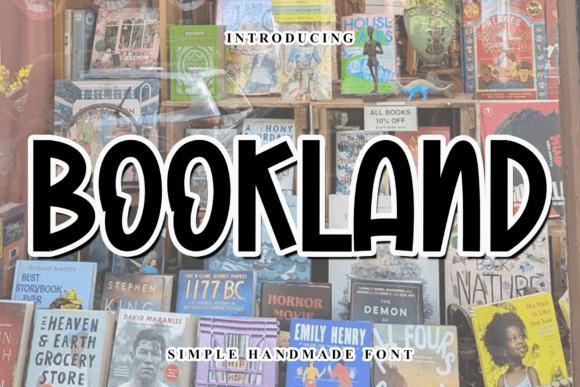
Bookland: A Modern Handwritten Font for Elegant Branding
There’s a specific kind of typography that doesn’t just sit on a page—it moves. You’ve seen it in high-end magazines, on the labels of artisanal products, and in the logos of boutique studios. It’s the font that feels like a personal signature, yet carries the weight of a professional brand. Bookland is that font. It’s a contemporary handwritten script that bridges the gap between personal touch and polished sophistication. Unlike casual, messy scripts or overly formal calligraphy, Bookland offers a fluid, rhythmic motion that feels both intentional and effortlessly elegant.
The Anatomy of Modern Elegance
What makes Bookland stand out in a crowded field of script fonts? It’s all in the details. The typeface features tall, graceful ascenders—the parts of letters like ‘b’, ‘d’, and ‘h’ that rise above the x-height. These aren’t just long; they’re swept with a gentle, looping motion that gives the font its signature rhythm. The descenders, like on ‘y’ and ‘g’, mirror this with a balanced, flowing curve. The overall texture is smooth, with consistent stroke weights that avoid the jittery, inconsistent look of many free handwritten fonts. This careful construction means Bookland reads as a premium font, one designed for projects where clarity and class are non-negotiable.
Its personality is best described as confident yet approachable. It doesn’t shout; it invites. This makes it a versatile display font for headlines and logos, but it’s crafted with enough subtlety to handle shorter blocks of text where a personal touch is needed. In the world of modern typography, it occupies a sweet spot: the warmth of a handwritten font with the reliability of a professionally designed typeface.
Where Bookland Truly Shines: Practical Applications
Knowing a font’s strengths helps you deploy it effectively. Bookland isn’t a universal workhorse like a sans serif font; it’s a specialized tool. Its greatest impact is felt in projects that aim to convey luxury, authenticity, and a human connection.
Branding & Logo Design: For entrepreneurs and small business owners, a logo is the cornerstone of brand identity. Bookland excels here, especially for businesses in the wedding industry, luxury goods, boutique consultancy, or artisanal food. A logo set in Bookland immediately suggests a brand that values craftsmanship and personal service. It pairs beautifully with a clean, geometric sans serif font for body text, creating a hierarchy that’s both dynamic and easy to navigate.
Editorial & Publishing: Bloggers and publishers can use Bookland to create striking magazine covers, chapter headings, or pull quotes. It adds a layer of sophistication to editorial design without feeling stuffy. Imagine a lifestyle magazine’s feature headline or a cookbook’s section title—Bookland gives it that curated, high-end feel.
Marketing & Digital Presence: In the digital realm, it’s a powerful tool for social media graphics, email headers, and website hero text. Used sparingly for key phrases or calls-to-action, it can dramatically increase visual engagement and brand recognition. For packaging design, it’s ideal for product names, taglines, or special edition labels, instantly elevating the perceived value of the item inside.
Making the Right Design Decision with Bookland
Choosing a creative font like Bookland requires more than just liking how it looks. You need to evaluate its fit for your specific project. Start by asking: does the project’s tone align with Bookland’s elegant, fluid personality? It’s perfect for a wedding invitation suite but might feel out of place in a technical manual or a children’s cartoon poster.
Readability is paramount. While Bookland is clearer than many script fonts, its primary role is as a display font. Use it for headlines, logos, and short accents. For body copy, always pair it with a highly legible serif font or sans serif font. A good font pairing balances contrast and harmony. Try combining Bookland with a simple, open sans serif like Montserrat or a classic serif like Lora. Test your pairings at various sizes to ensure the hierarchy is clear.
When you evaluate the font package, look for included styles. Does it come with alternate characters, ligatures, or swashes? These extras are the mark of a quality premium font and allow for greater customization. A robust set of alternates can help you avoid repetitive letterforms and create a more organic, custom look in your design.
Finally, consider the licensing. If you’re using Bookland for a client project, merchandise, or a product you sell, you need a commercial license. Most reputable font foundries offer clear licensing options for desktop, web, and app use. Respecting font licensing is a fundamental part of professional practice and protects both you and the type designer.
Integrating Bookland into Your Workflow
Once you’ve decided to use it, integrate Bookland thoughtfully. In a branding system, define its use clearly in your style guide—perhaps only for the primary logo and major headlines. In a publication, use it for chapter openers or section dividers to create visual anchors. For social media, create a template where Bookland is used for the main message, supported by your brand’s secondary fonts for details.
The key is consistency. Using Bookland sparingly and strategically across all your touchpoints—from your website to your business cards—reinforces your brand identity and makes your visual communication instantly recognizable. It’s not just a font; it’s a design asset that, when used correctly, can significantly influence how your audience perceives your brand’s professionalism and attention to detail.
In a digital landscape saturated with generic typography, a thoughtfully chosen typeface like Bookland can set you apart. It offers a human, crafted quality that resonates on a deeper level, turning ordinary text into a memorable brand experience. Whether you’re designing a wedding suite, launching a boutique product line, or refreshing your blog’s visual identity, it provides the modern elegance needed to make every word count.