White Monkey: A Script Font That Whispers Luxury
You know the moment. You’re scrolling through a sea of digital noise, and something stops you. It might be a logo on a website, a headline on a social media post, or the label on a bottle of artisanal olive oil. It’s not shouting; it’s speaking in a calm, confident voice that feels both personal and polished. That’s the quiet power of a well-chosen typeface, and it’s exactly the kind of presence White Monkey brings to the table. This isn’t just another script font; it’s a tool for creating an immediate, elegant connection.
More Than Just Pretty Curves: The Character of White Monkey
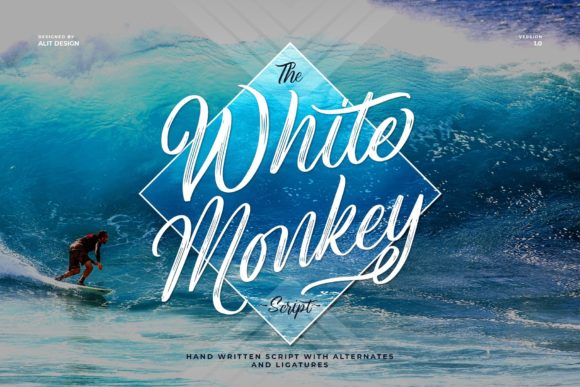
At first glance, White Monkey is all about refined beauty. It’s a script font with a lovely, flowing rhythm that feels both natural and meticulously crafted. The strokes have a delicate weight, avoiding the heaviness that can make script fonts hard to read. Think of it as the typographic equivalent of a handwritten invitation on premium cardstock—personal, yet unmistakably professional. Its overall personality is one of understated elegance. It doesn’t rely on dramatic flourishes to make its point; instead, its strength lies in its clean lines and harmonious letterforms. This makes it incredibly versatile. It can feel romantic and soft for a wedding stationery brand, or sleek and sophisticated for a high-end cosmetics logo.
The real magic, however, is in the details. As a premium font, White Monkey is PUA encoded. For the uninitiated, that’s a designer’s shorthand for “you get the whole toolkit.” This means you have direct access to a wealth of alternate characters, swashes, and ligatures. Want to give your logo’s tail a bit more flair? There’s a glyph for that. Need to connect two letters in a more organic way? There’s a ligature for that. This level of customization is what separates a standard display font from a true creative font asset. It allows you to move beyond just typing words and into the realm of crafting a unique visual voice.
Where Does White Monkey Shine? Real-World Applications
Knowing a font is beautiful is one thing; knowing where to use it is what matters. White Monkey is a specialist, not a generalist. You wouldn’t set a 500-page novel in it, but for the right project, it’s transformative.
In brand identity, it excels as the accent font. Imagine a brand that pairs a clean, geometric sans serif font for its body copy with White Monkey for its logo, tagline, or hero section headline. This combination creates an immediate hierarchy and injects personality without sacrificing readability. It’s perfect for lifestyle brands, boutique hotels, fashion labels, and wellness companies that want to convey a sense of personal care and elegance.
For packaging design, think shelf appeal. A jar of artisanal jam, a bottle of small-batch gin, a box of luxury chocolates—White Monkey can make the product name feel like a signature from the maker. It tells the customer this isn’t a mass-produced item; it’s something special. In editorial design, such as magazine pull quotes or chapter headings, it adds a touch of sophistication that breaks the monotony of standard body text.
Digital spaces are another natural home. For web design, it can be used strategically in hero banners or call-to-action buttons to draw the eye. On social media graphics, it makes quotes, announcements, and sale posts feel more curated and intentional. It’s also a fantastic choice for logo design for businesses in the creative, wedding, or personal coaching industries. The key is using it where it can breathe and be appreciated, not where it will be forced to do the heavy lifting of long-form reading.
Making It Work: Practical Tips for Using White Monkey
Choosing a font like White Monkey is the first step. Using it effectively is the next. Here’s how to get the most out of this typeface.
Evaluate the Fit. Before you fall in love with the swashes, ask: Does this font’s personality match my project’s goal? If your brand voice is authoritative and technical, a serif font or a strong sans serif font might be more appropriate. White Monkey is for projects that value beauty, approachability, and a human touch.
Master the Font Pairing. This is non-negotiable. A script font like White Monkey needs a stable partner. Your best bet is a highly legible, neutral serif font (like Garamond or Lora) or a clean sans serif font (like Montserrat or Open Sans) for body copy. Use White Monkey sparingly for headlines, logos, or key phrases. This contrast creates visual interest and ensures your message is clear.
Test for Readability. Always test your chosen text at the size it will be viewed. A beautiful script can become an illegible squiggle at 12 pixels on a mobile screen. Use it for larger display text, or ensure your specific message is short and simple enough to be understood instantly.
Explore the Extras. Don’t just type and go. Dig into the OpenType features. Swap out alternate ‘a’s or ‘g’s to see how they change the word’s flow. Add a subtle swash to the end of a signature. This is where you add the unique, handcrafted touch that makes a design feel truly custom.
Understand the License. As a commercial font, White Monkey comes with a license that dictates how you can use it. This is critical for any business use. Whether you’re creating a logo for a client, designing product packaging, or using it on your business website, ensure your license covers that specific use. Reputable font marketplaces make this clear. This isn’t just about legality; it’s about respecting the craft of the type designer who created this valuable design asset.
In the end, White Monkey is more than a collection of glyphs. It’s a feeling. It’s the difference between a design that looks good and one that feels intentional and crafted. Used thoughtfully, it doesn’t just display words—it gives them a voice. And in a world of generic text, that voice can be your most powerful brand asset.