Buffon: The Handcrafted Script with Modern Appeal
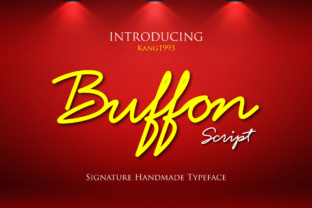
When you first encounter Buffon, there's an immediate sense of warmth and authenticity. This isn't just another script font—it's a handcrafted typeface created by Kang1993 that carries the subtle imperfections and organic flow of real handwriting. The strokes feel natural, with varying thicknesses that mimic the pressure variations of pen on paper. What makes Buffon stand out in a crowded market of premium fonts is its ability to feel both personal and polished simultaneously.
Understanding Buffon's Visual Character
Buffon presents itself as a script font with a contemporary edge. The letterforms maintain readability while preserving that hand-lettered quality designers often seek. You'll notice elegant swashes and ligatures that add sophistication without becoming overly decorative. The overall personality strikes a balance between casual charm and professional refinement—making it versatile enough for various applications where you want to inject personality without sacrificing clarity.
Unlike many handwritten fonts that sacrifice legibility for style, Buffon maintains consistent spacing and proportional relationships. The x-height feels comfortable, and the ascenders and descenders create a pleasant rhythm across text blocks. This careful balance means you can use it for more than just headlines—short paragraphs and callouts remain accessible and engaging.
Where Buffon Truly Shines
From logo design to packaging design, Buffon finds its place in projects that demand a human touch. For entrepreneurs building brand identity, this font offers an opportunity to stand apart from the geometric sans serifs dominating digital spaces. Imagine a boutique coffee brand using Buffon for its logo—the organic curves mirror the artisanal quality of their product, creating instant visual alignment with their brand values.
In editorial design, Buffon works beautifully for pull quotes, chapter titles, or magazine headers where you want to draw readers in with emotional resonance. The font's natural flow guides the eye, creating visual hierarchy that feels intuitive rather than forced. For web design, consider using it strategically for hero sections or call-to-action buttons where personality matters more than body text readability.
Social media graphics benefit tremendously from Buffon's distinctive character. In feeds saturated with clean sans serifs, a thoughtfully applied script font cuts through visual noise. Crafters and hobbyists might use it for personal projects like wedding invitations or custom stationery, while content creators could employ it for YouTube thumbnails or Instagram stories that need that authentic, approachable feel.
Practical Considerations for Your Projects
Before committing to Buffon for your next project, take time to evaluate its fit with your specific needs. As a display font, it excels in larger sizes where its details can breathe. At smaller sizes, some of the finer characteristics might get lost—this is where testing becomes crucial. Create sample layouts at various scales to see how it performs in your particular context.
Font pairing is where many designers get creative with Buffon. It plays well with clean sans serif fonts for body text—think Montserrat or Open Sans for digital applications, or perhaps a neutral serif font like Lora for print materials. The contrast creates visual interest while maintaining readability across different content types. Avoid pairing it with other decorative fonts, as this can create visual competition rather than harmony.
Review the complete character set before purchasing. Premium fonts like Buffon often include alternate characters, stylistic sets, and special glyphs that expand your creative options. Check for multi-language support if you're working with international audiences, and ensure the licensing aligns with your intended use—whether for personal projects or commercial applications.
When implementing Buffon in modern typography layouts, pay attention to spacing and line height. Script fonts often need more generous leading to prevent characters from colliding. Test color combinations thoroughly—dark backgrounds with light Buffon text can create stunning contrast, but ensure sufficient contrast ratios for accessibility. The font's natural warmth works particularly well with earth tones, muted pastels, or rich jewel tones depending on your brand palette.
Remember that no single font works for every situation. Buffon's strength lies in specific applications where personality and authenticity drive engagement. Use it strategically rather than universally, and you'll find it becomes a valuable part of your design assets toolkit—one that helps you create memorable visual communications that resonate with your audience on a human level.